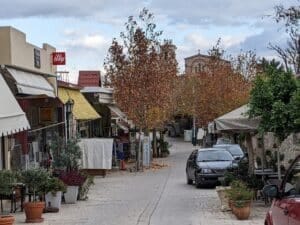
Leaving Kalamata was a bittersweet moment for me. To my heart, Kalamata was the epitome of romance in its most authentic form, unadorned and true to its natural beauty. It felt like a honeymoon, and I couldn’t help but yearn to either stay or return soon.
Nevertheless, we embarked on the roughly two-and-a-half-hour journey northward. Despite it being winter in Kalamata, we were blessed with unseasonably warm weather, with temperatures hovering around 26 degrees Celsius (78 degrees Fahrenheit) each day. About halfway into our journey, as we marvelled at the sun’s dance on the surrounding mountaintops, the temperature suddenly dropped to the upper teens. It was at that moment that we spotted a sign pointing the way to Korinthos (Corinth).
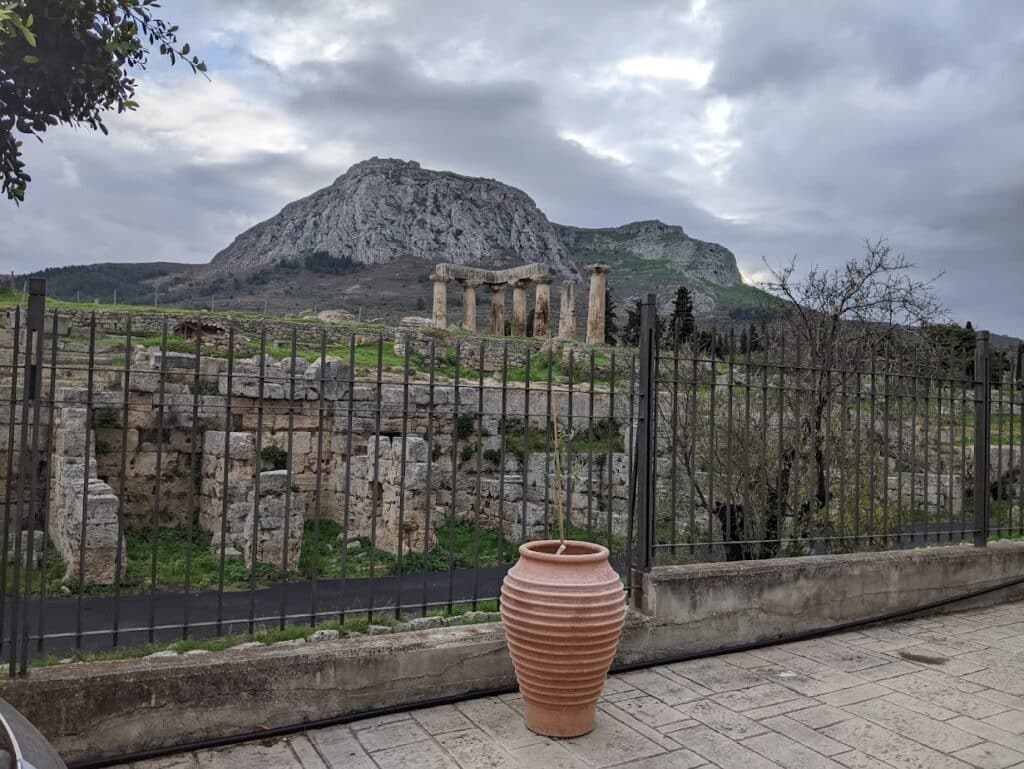
It was lunchtime, and Korinthos promised to be a truly unique stop. With a keen interest in history and comparative religion, I was naturally drawn to this place.
The very name “Corinth” is associated with significant artistic achievements throughout history. The intricate “Corinthian column” and black-figure pottery are examples that resonate worldwide even today. In mythology, names like Sisyphus, Sinis, and Theseus are intertwined with Corinth. The city is also surrounded by fertile lands, with Corinthian grapes serving as a fundamental ingredient in one of Greece’s renowned elixirs, Metaxa. As a vital port city, Corinth was a hub for products from both Asia and Europe.
Throughout its history, Corinth endured numerous devastating earthquakes, both in ancient and modern times. The ancient town of Corinth was obliterated in 1858, leading to the establishment of the “new” Corinth about three kilometres (two miles) northeast of the ancient site.
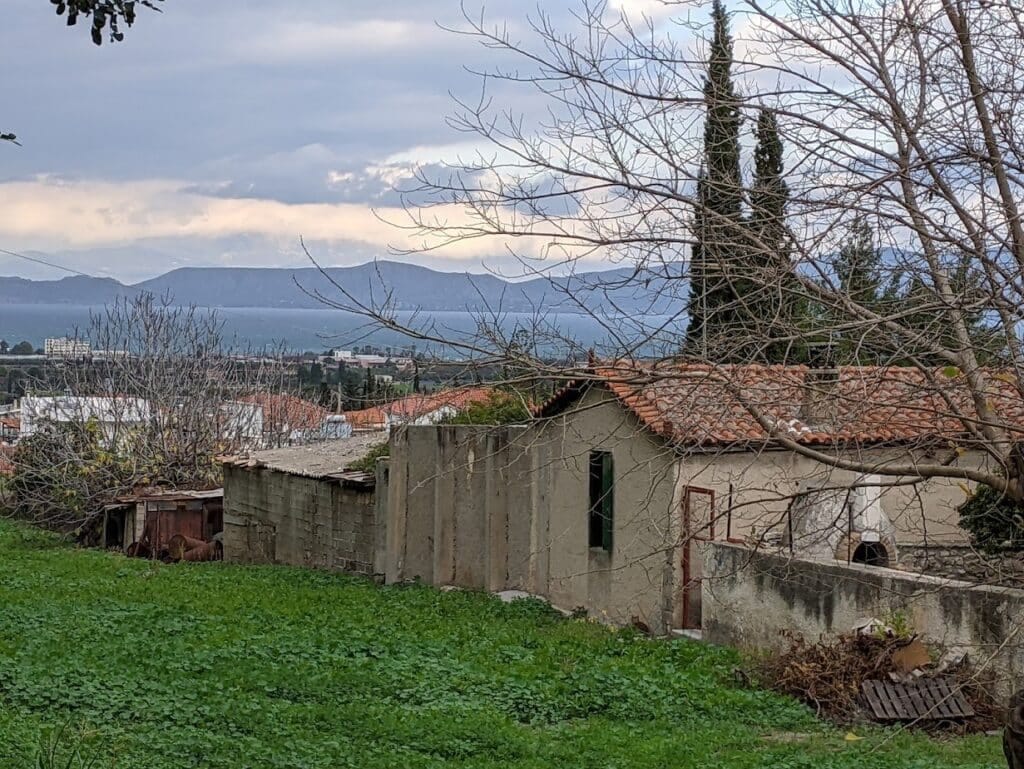
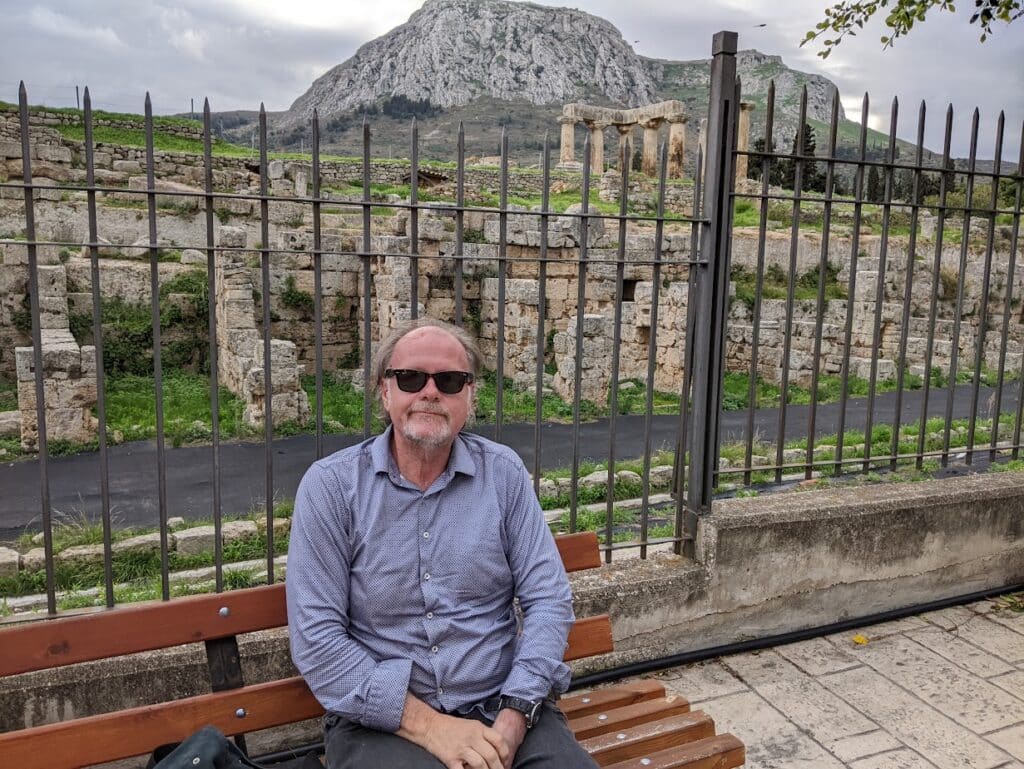
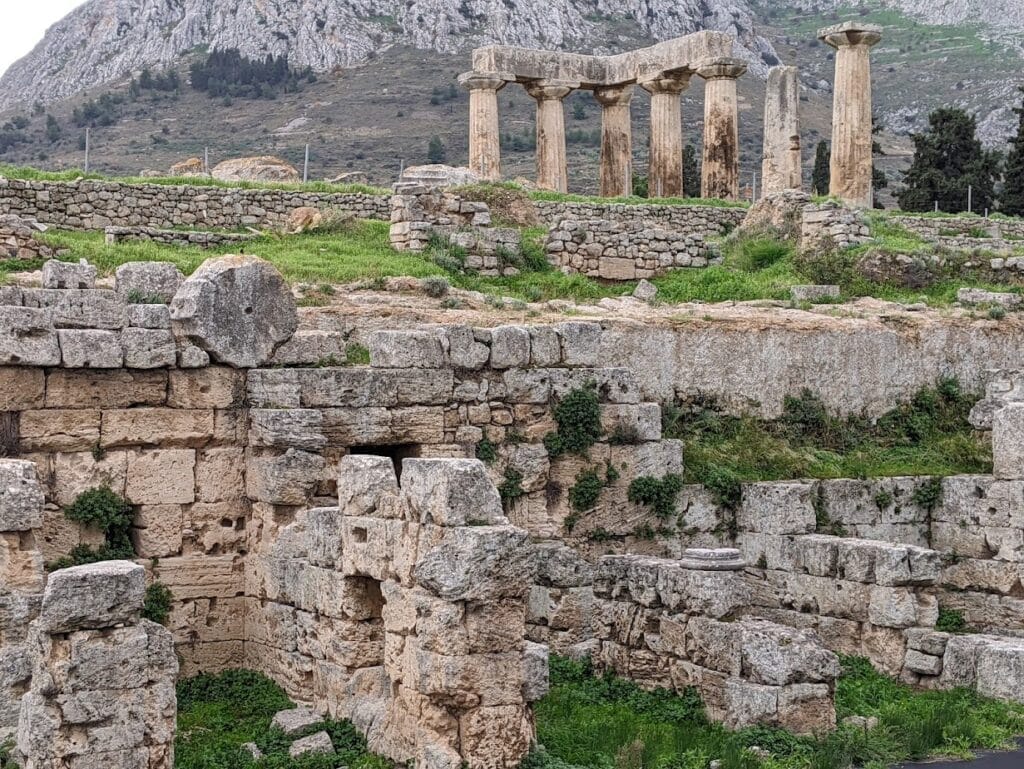
Our quest led us to explore the remnants of the ancient town. People had settled near this site as far back as the Neolithic era. Corinth has witnessed diverse rulers, from Archaic and classical Greek to Roman, Ottoman, and various forms of modern governance. Upon entering the old site, the ruins spoke volumes.
As someone deeply intrigued by the evolution of religion and worldviews, I yearned to visit the place where Saul of Tarsus, known as St. Paul, had founded an early Christian church. I also sought to connect with the surroundings where Paul had addressed two of his epistles, namely, I Corinthians and II Corinthians, both written in the 50s CE and now integral parts of the New Testament. According to many scholars, these two books played pivotal roles in shaping early Christian doctrine and addressing matters of community solidarity.
Corinth’s canal is another notable feature in its rich history. Located four kilometres (2.5 miles) east of the city, this canal allows ships to traverse between the Mediterranean and Aegean seas. Stretching over 6.4 kilometres (four miles) in length, attempts to construct a canal date back to the Roman era, but successful completion only began in 1882. Today, the canal holds little economic significance, as it is too narrow to accommodate modern vessels of substantial size.
On a cloudy afternoon, we savoured a delightful meal in a café, relishing dishes crafted from locally sourced produce and sipping on fine local wines. Our next destination: Athens.